
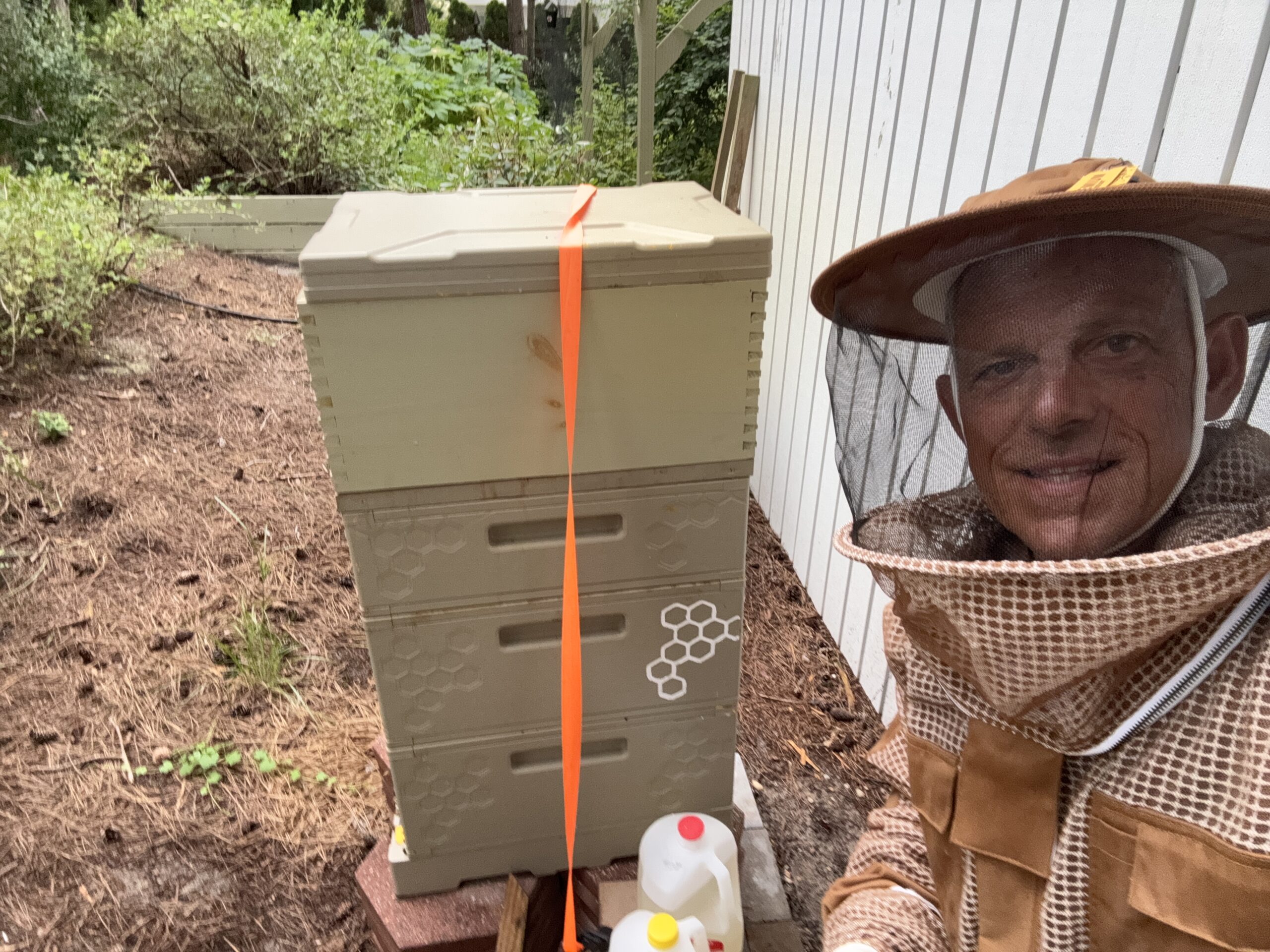
Just 2 Hives
Yes, Just two hives. Only two. Just like Moses had to keep telling the rabbits when they were getting on the ark, “Only two, only two!” My goal from the beginning was to keep two bee colonies alive for one year. These were my principal methods to give my bees the best chance for year one survival:
- Manage only two hives so I could pay attention to all the details of the hives.
- No honey extraction in year one to improve their survival chances.
- I bought HiveIQ hives which are more expensive than wooden boxes but reports show that the high density polystyrene boxes keep the bees much warmer through the winter and give them a much higher percentage change of survival.
- I fed them a 50/50 sugar water solution through out the summer and they enjoyed it thoroughly. In the fall I switched to a 2:1 sugar to water mixture, and in late fall to fondant when the weather got down to 50 degrees Fahrenheit. Unfortunately I was only able to feed the fondant one time and temperatures dropped precipitously for November and December and I read that one should not open the hive for any reason in cold weather. The last two months the temperature has been about twenty degrees below normal almost every day.
- I kept a bird bath full of water within ten feet of the two hives.
- Examined the hives often for pests or other inconsistencies.
- Treated for Varroa mites.
- Joined the local Delaware Beekeepers Association and requested a mentor.
It has been almost a full season for my two bee hives. I started in the Spring and we are entering Winter. I am wishing for the best and hopefully I have given my bees the best chance for winter survival.
My hive boxes at day 1 in the Spring
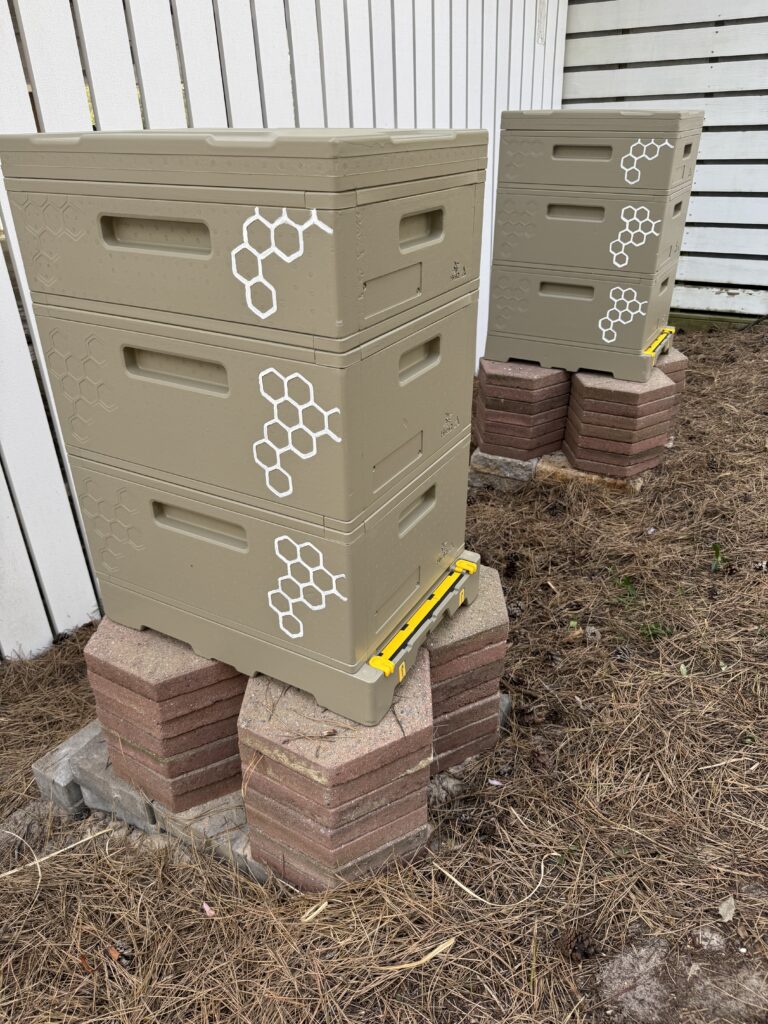
How it all started
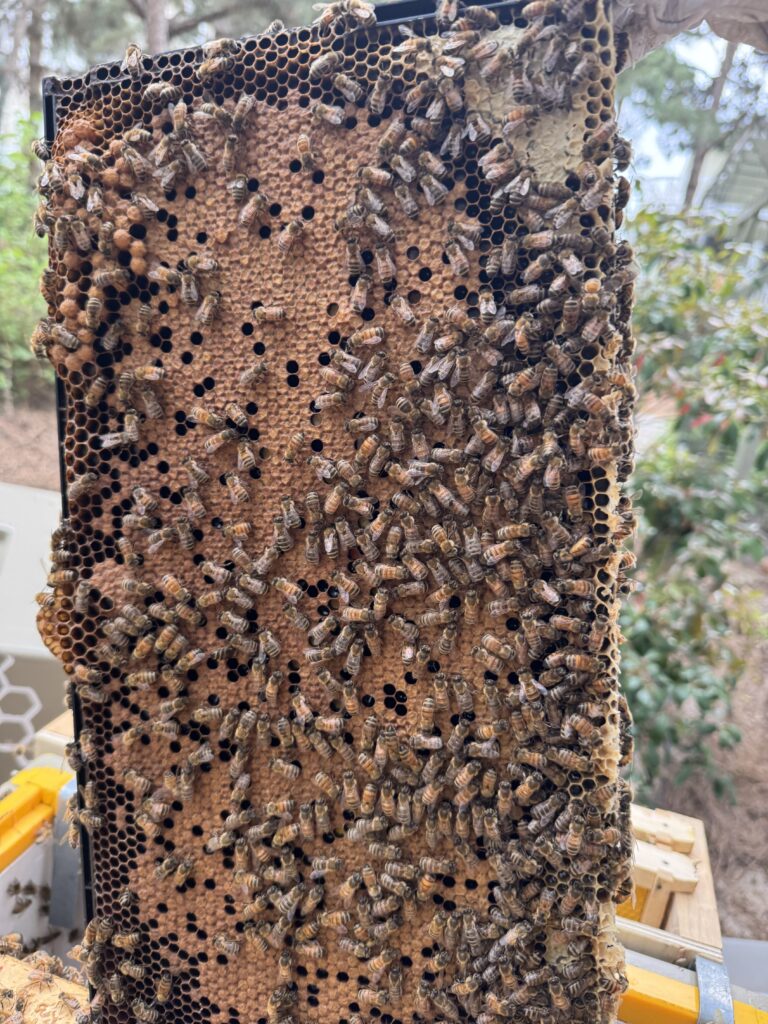
I picked up two nucs from Douglas Bee Apiary in Wilmington, DE around April of this year. I placed the nucs in two new HiveIQ deep frame boxes where fortunately they thrived through the summer. The hives appeared to have had a great summer with each hive at a population of around 50,000 bees at their peak. I still can’t identify the queen but that is just my inexperience. As long as one sees new brood ( that is eggs, larvae, and pupae) then you know the queen is alive and active. They have huddled for the winter at this point and I will leave them alone.
Bee Hive Inspection at about 2 months
Hive inspection
Treating for Pests
The hives remained pest free to the best of my knowledge. I treated for mites in the Spring and Fall with Oxylic Acid vapor. Examination never showed any sign of wax moths or beetle infestations. There was a skunk who came to visit the hives a couple of times but thankfully we were able to successfully ward it off by shining a flashlight at it when it got too close to the hives.
I wore a full bee suit whenever inspecting the hives and often used a smoker to quell overzealous bees. A couple of times I screwed up and left a little skin showing between my gloves and my bee suit or didn’t quite get a zipper pulled tight. Sure enough, whenever the bees got ornery and I left an opening, I ended up getting stung. Learned my lesson the hard way.
Honey Extraction
Since it was the first year for the bees, I did not take any honey from the hive. I did participate with the Sussex County Chapter of the Delaware Beekeeper’s Association conducting a honey extraction at the Department of Agriculture near Georgetown, DE. Their hives had lots of extra honey and I was able to buy some raw honey at a discount for my participation in the extraction process. I learned a lot about taking the cap off the frames and spinning the frames in an extractor to get honey. It was a sticky and bonding experience with fellow beekeepers.
Bee Demeanor
Of my two hives, one was definitely more irascible than the other. With the meaner hive, It seemed like every time I took the hive lid off they were immediately ornery and easily provoked. I have been told that it was a tendency created by the pheromones of the queen. Speaking of queens, I was never able to identify the queen. Searched and searched but never could single her out
I learned to keep it simple with beekeeping. Resist the urge to purchase extra equipment until you have been beekeeping for at least a half a year. This is a list of the essential products for year one:
- Obviously a hive for your bees.
- A full body bee suit with gloves
- Smoker
- J-tool to separate frames.
- A very soft long bristle brush to shoo away bees off your bee suit and equipment.
- a bee feeding methodology of sugar/water mixture of your choice. I think it is a good idea to feed for at least the first year, but some purists say to let them fend for themselves.
- Verroa mite treatment methodology – unfortunately this is not an option – it is a must. I borrowed a oxylic acid vaporizer from my mentor. I have heard that their is now a treatment strip that you can lay in the frames that is much simpler. Will look into that next year.
That is it! Everything else is non-essential.
Next year will be a challenge to determine how to extract honey if I have the chance to do so. All good quality extraction equipment is terribly expensive and thus the reason so many beekeepers have multiple hives.